
Licensed Home Healthcare Provider in Kuwait
Post Surgical Rehabilitation for Fractures and Orthopedic Surgery at Home
Health Care Solutions provides post-surgical rehabilitation at home in Kuwait through qualified physiotherapists.
Licensed by Ministry of Health
License No. 22/2008
Certified Specialized Nurses
Qualified home nursing professionals
Safe & Trusted Care
Patient-focused support at home
Available 24/7
Flexible care whenever needed
Quick Booking
Request Post Surgery Rehabilitation
Book your Home Care for Post Surgical Rehabilitation for Fractures and Orthopedic Surgery in 5 simple steps
Choose the service, preferred plan, date and time, then our team will confirm the session details.
Choose Service
Start with Home Care for Post Surgical Rehabilitation for Fractures and Orthopedic Surgery
Select Sub Service
Choose the nursing option that best matches the patient’s needs.
Choose a Plan
Select an available session plan or request a customized option.
Select Date & Time
Choose your preferred appointment time according to availability.
Receive the Service at Home
Customer Service confirms the request and coordinates the home visit.
What Is Physiotherapy After Surgery and Bone Fractures?
Post-surgical physiotherapy is a rehabilitation program designed to help patients gradually restore movement, strength, flexibility, and the ability to perform daily activities after orthopedic surgeries or bone fractures, according to the stage of recovery and the instructions provided by the doctor or surgeon.
Health Care Solutions provides post-surgical rehabilitation at home in Kuwait through qualified physiotherapists. Each program is tailored to the type of surgery or fracture, range of motion, muscle strength, ability to walk, and weight-bearing capacity, allowing patients to receive care at home without the need for frequent travel during the recovery period.
Who Needs Physiotherapy After Orthopedic Surgery or Bone Fractures?
The appropriate time to begin rehabilitation varies depending on the type of surgery or fracture, healing progress, and the surgeon’s instructions. Patients should not begin exercises or increase weight-bearing on the affected limb without appropriate medical clearance.
Conditions that may require rehabilitation after orthopedic surgery and fractures include:
- Patients recovering from knee replacement surgery.
- Patients recovering from hip replacement surgery.
- Certain cases following spinal surgery, according to the surgeon’s instructions.
- Patients recovering after surgical fixation of bone fractures.
- Patients who need physiotherapy after cast removal due to muscle weakness or joint stiffness.
- Patients experiencing difficulty walking after a period of immobilization or reduced activity.
- Patients experiencing limited joint range of motion after surgery or a fracture.
- Patients who need to use crutches or a walker during the recovery period.
- Patients who need to regain the ability to sit, stand, transfer, and perform daily activities.
Rehabilitation after knee and hip replacement, spinal surgery, and fracture fixation are common applications of physiotherapy following orthopedic procedures.
Home Physiotherapy Sessions After Surgery
What Do Physiotherapy Sessions After Surgery and Fractures Include?
The post-surgical physiotherapy plan varies from one patient to another depending on the type of surgery or fracture, healing stage, and restrictions set by the surgeon. The physiotherapist therefore begins with an assessment before selecting appropriate exercises and treatment approaches for each stage.
Post-Surgical Movement Assessment
The physiotherapist assesses joint range of motion, muscle strength, balance, and the patient’s ability to stand, walk, and perform daily activities.
The surgeon’s instructions regarding movement and weight-bearing are also reviewed before determining the appropriate exercise level.
Restoring Range of Motion
Surgery or a period of immobilization may result in joint stiffness and reduced range of motion.
The physiotherapist uses gradual exercises and techniques to help restore movement and flexibility within the limits permitted during the recovery stage.
Muscle Strengthening After Surgery
Muscles may become weak as a result of reduced activity or immobilization of a limb following surgery or a fracture.
Post-surgical rehabilitation includes progressive strengthening exercises, with intensity adjusted according to the patient’s ability and stage of recovery.
Standing and Transfer Training
During the early stages of recovery, some patients may need to relearn how to stand, sit, and transfer between the bed and chair.
The physiotherapist works on these skills gradually according to the patient’s abilities and the restrictions established after surgery.
Walking Retraining
When the patient’s condition allows standing and walking, the program may include gradual gait and mobility training.
The physiotherapist follows the surgeon’s instructions regarding the amount of weight that can be placed on the affected limb, particularly after fractures and limb surgeries.
Crutch and Walker Training
Some patients may need to use mobility aids during part of their recovery.
The physiotherapist helps patients learn how to use crutches or a walker safely and appropriately according to their condition and the doctor’s instructions.
Improving Balance and Stability
A patient’s balance may be affected after a period of reduced mobility or due to muscle weakness.
Sessions may include appropriate exercises designed to improve stability and balance according to the patient’s permitted level of movement.
Activities of Daily Living Training
The goal of rehabilitation is not limited to performing exercises. It also includes helping patients gradually regain their ability to perform daily activities.
This may include getting in and out of bed or a chair, moving around the home, using stairs, and becoming more independent according to the patient’s condition.
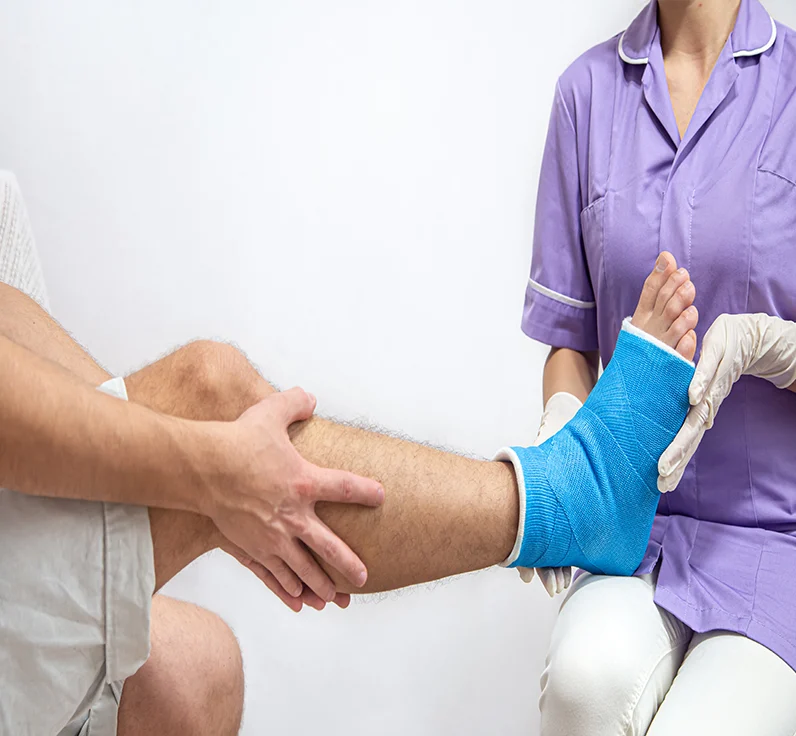
Physiotherapy After Cast Removal
After cast removal, some patients may experience joint stiffness, muscle weakness, and difficulty moving.
The physiotherapist assesses the condition and then determines appropriate exercises for movement, strengthening, and walking while taking the fracture healing stage and medical clearance for movement and weight-bearing into consideration.
Progress Monitoring and Program Adjustment
Progress in range of motion, muscle strength, walking, balance, and functional ability is assessed throughout the rehabilitation period.
As the patient’s condition improves, the exercise level and rehabilitation goals are gradually adjusted rather than progressing to more advanced stages before the patient is ready.
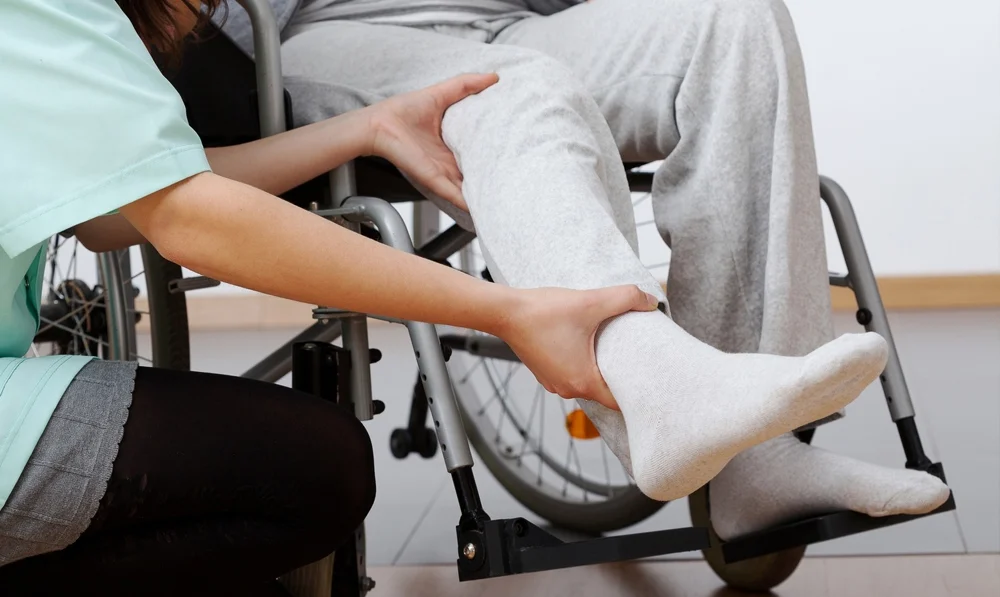
Assistance With Sitting and Mobility
When the patient’s condition allows, a nurse can assist with sitting, repositioning, or transferring from the bed according to medical instructions.
The patient is not forced to move or perform activities that are not medically permitted.
Our Physiotherapy Services Also Include:
Home Physiotherapy After Knee Replacement
Following knee replacement surgery, the rehabilitation program focuses on restoring knee range of motion, strengthening the muscles, and improving standing, walking, and daily activities.
The program progresses according to the patient’s condition and the protocol established by the surgeon, with exercise intensity and weight-bearing adjusted according to the stage of recovery.
Home Physiotherapy After Hip Replacement
Rehabilitation after hip replacement helps gradually restore movement, strength, walking ability, and the ability to perform daily activities.
The physiotherapist follows the precautions and restrictions established by the surgeon throughout the different stages of recovery.
Home Physiotherapy After Spinal Surgery
Some patients may require a gradual physiotherapy program after spinal surgery to restore movement, strength, and functional ability.
The timing of sessions and types of exercises vary significantly depending on the type of surgery and the patient’s condition. Therefore, the program is carried out according to the surgeon’s instructions and the specific restrictions established for the patient.
Rehabilitation programs following spinal and cervical spine surgeries and fixation procedures are among the services provided as part of post-surgical rehabilitation.
Why Health Care Solutions
Why Choose Health Care Solutions for Post-Surgical and Fracture Rehabilitation?
Qualified physiotherapists
Assess movement and develop an appropriate rehabilitation program.
In-home sessions
Reduce the need for travel during periods of limited mobility.
Program tailored to the surgery or fracture
Exercises are selected according to the patient's condition and recovery stage.
24/7 Home Service
Care can be arranged during the day, at night, or around the clock.
Following the surgeon's instructions
Movement and weight-bearing restrictions are carefully considered.
Gradual Rehabilitation
Patients progress through movement, strengthening, and walking stages according to their recovery.
Continuous Monitoring
Movement, strength, and functional ability are reassessed and the program is adjusted accordingly.
Practical in-home training
Focus on the movements and activities the patient needs to regain in everyday life.
The exact service, specialist preference, duration and appointment time are confirmed according to customer requirements and availability.
Post-Surgical and Fracture Rehabilitation Prices in Kuwait
The cost of physiotherapy after surgery and fractures varies depending on the type of surgery or fracture, stage of recovery, and the patient’s current ability to move and walk.
- Type of surgery or location of the fracture.
- Healing and recovery stage.
- Joint range of motion and muscle strength.
- Ability to stand and walk.
- Number of physiotherapy sessions required.
- Duration of the rehabilitation program.
The rehabilitation program and cost are determined according to the patient’s assessment and the instructions provided by the doctor or surgeon.
FAQs
Frequently Asked Questions About Physiotherapy After Surgery and Fractures
When Does Physiotherapy Start After Surgery?
The timing of physiotherapy depends on the type of surgery, the patient’s condition, and the surgeon’s instructions.
Some forms of movement may begin early in certain cases, while other patients may require a period of protection before starting a rehabilitation program.
Can Physiotherapy After Fractures Be Provided at Home?
Yes. Physiotherapy after bone fractures can be provided at home when the patient’s condition is suitable. Exercises are selected according to the fracture location, healing stage, and the doctor’s instructions regarding movement and weight-bearing.
Do I Need Physiotherapy After Cast Removal?
Some patients may need physiotherapy after cast removal if they experience muscle weakness, joint stiffness, or difficulty regaining movement and walking ability.
The physiotherapist determines the appropriate program after assessing the condition and confirming that movement is medically permitted.
Can I Start Physiotherapy While Using Crutches?
Yes, in some cases. Crutches may be part of the rehabilitation process itself.
The surgeon and physiotherapist determine the permitted level of weight-bearing and the appropriate method of walking training.
Is Physiotherapy Important After Knee Replacement?
Rehabilitation is a standard part of recovery programs following knee replacement surgery. It focuses on restoring movement and strength and improving the ability to stand, walk, and perform daily activities.
Can Physiotherapy After Spinal Surgery Be Provided at Home?
Home physiotherapy can be provided for certain patients following spinal surgery. However, the timing of sessions and permitted exercises depend on the type of surgery and the surgeon’s instructions.
Why Do Muscles Become Weak After Surgery or a Fracture?
Reduced activity or immobilization of a limb for a period of time can lead to muscle weakness. Progressive strengthening exercises are therefore included in rehabilitation programs when appropriate for the patient’s recovery stage.
Does the Absence of Pain Mean Rehabilitation Is Complete?
Not necessarily. Pain may decrease while muscle weakness, limited range of motion, balance problems, or walking difficulties remain.
Therefore, completion of rehabilitation depends on the patient’s functional and mobility goals and clinical assessment, rather than pain levels alone.
How Many Physiotherapy Sessions Are Needed After Surgery?
There is no fixed number of sessions that applies to every patient.
The number of sessions depends on the type of surgery or fracture, stage of recovery, current movement and strength levels, rehabilitation goals, and the patient’s response to the program.
Choose the Physiotherapy Service That Fits Your Needs



Booking Form
Book or Customize your Post Surgical Rehabilitation Service
Service preselected
Male / female options subject to availability
Customer Service confirmation
Google Reviews + Service Testimonials
What Customers Say About Their Post Surgical Rehabilitation Care experience
 Posted on Google

 kumar babu
Trustindex verifies that the original source of the review is Google.
Posted on Google Pamila KwPosted on Google
 Titto EldhoPosted on Google
 deepa jobyPosted on Google
 Sobiya SobiyaPosted on Google
 Sabitha SajiPosted on Google
 jency ekPosted on Google
 Jinu ShensPosted on Google
 Swarnalatha O M

Other Home Healthcare Services